
Blog · HVAC · August 10, 2026 · 7 min read
HVAC Truck Inventory Software: Track Capacitors, Contactors, and Tools by Van
Most HVAC software tracks the ticket. Almost none of it tracks the capacitor on the passenger-side bin of Truck 101. That gap is why techs still call the shop from the driveway.
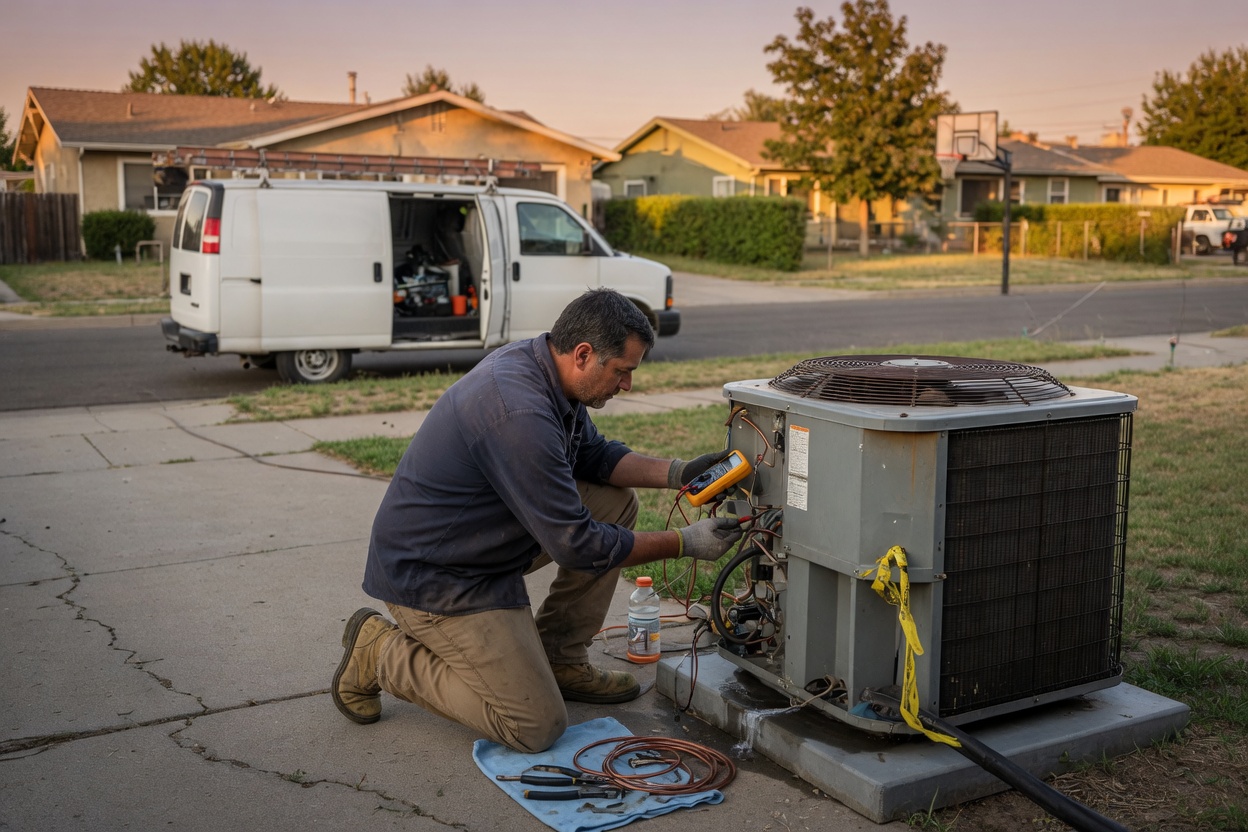
The driveway call is an inventory problem
A no-cool call looks simple until the tech opens the van and the 45/5 capacitor is gone. Dispatch already sold a same-day window. The homeowner is home. Now the truck is rolling to a supply house, the ticket is late, and the next call slips. That is not a training issue. It is a truck inventory issue.
Spreadsheets and folder apps tell you the company owns twelve capacitors. They do not tell you which van has the dual run you need this afternoon. HVAC inventory software only works if the unit of storage is the truck — not a shared “Electrical” folder that five techs raid.
What belongs on an HVAC van, and who should see it
A working HVAC truck carries fast movers (capacitors, contactors, fuses, thermostats, filters, condensate pumps), a smaller set of boards and motors, and tools that walk off if nobody checks them out. The office needs the full picture. The tech needs a phone view of their own van, with photos, so they can confirm a part when the box is torn.
Do not stock every SKU from Johnstone on every van. Stock the parts that close 80% of your tickets, then transfer specialty items from the warehouse the morning of the job. Truck-level software makes that transfer a record, not a sticky note on the windshield.
Scan the part to a job number, not to “used”
If a tech taps “use” with no ticket number, you will never match the invoice to the van. HVAC job costing only works when the scan carries the work-order number. That is how you catch the capacitor that left the truck but never made the invoice.
Phone scanning is enough. Techs already have a camera. Offline mode matters more than a fancy gun — attics and basements eat cell signal. The scan should queue on the phone and sync when they get back to the street.
Dispatch should check the truck before the tech leaves the shop
The cheapest no-part roll is the one that never happens. Give dispatch a live view of each van. If Truck 14 is out of 40/5s, send Truck 8 or transfer two units from the warehouse before the first call.
This is also how you stop “tribal knowledge.” When only one dispatcher remembers that Dave hoards motors, you are one vacation away from chaos. The truck record should be the source of truth, not Dave’s memory.
How FleetStock maps to an HVAC shop
In FleetStock each van is a location. The master list holds the capacitor with a photo, cost, sell price, and min stock. Inventory lives on the van. A tech scans the barcode, types the job number, and quantity drops on that truck only. The office sees the usage on the job export.
Transfers move stock warehouse → van or van → van with a history. Reorders fire when a truck or the warehouse drops below min stock. You are not paying per tech per month. You pay once a year — $129, $197, or $249 — after a 14-day trial.
A 30-day rollout that actually sticks
Week one: create trucks, import the 80 parts that leave every week, photo the confusing ones, stock the warehouse, transfer a realistic load to each van. Week two: make techs scan every use for five days, even if it feels slow. Week three: compare scans to invoices. Week four: set min stock from real usage, not guesses.
Owners who skip the invoice compare step never get the money back. The software is the ledger. The habit is scanning. Both have to land or you still have a pile of parts and a pile of unbilled tickets.
FAQ
Is FleetStock HVAC software or generic inventory software?
FleetStock is truck inventory for service fleets. HVAC shops use it for van stock, job scans, transfers, and reorders — not a warehouse folder tree.
Can techs see only their truck?
Yes. The technician view is a phone app layout with their assigned van, scanner, and how-tos. Office users see every truck and the warehouse.
Does it work without cell signal in a basement?
Scans save on the phone and sync when the tech has signal again. That is the point of offline van mode.
See what is on every truck this week
14-day free trial. Then one yearly invoice — $129, $197, or $249.